Frozen AC Coils
Why Your AC Freezes Up
Ice on an AC means the coil got too cold, usually from weak airflow or low refrigerant. Turn the cooling off and let it thaw before you run it again.
Last updated: October 16, 2026.
An air conditioner that freezes up looks strange in July, but the cause is plain. The indoor coil must stay above freezing while it pulls heat from your home. When airflow drops or refrigerant runs low, the coil temperature falls, moisture on the coil turns to ice, and the ice spreads until the unit can barely cool at all.
Running a frozen unit makes it worse. Ice blocks airflow further, the coil gets colder, and the compressor strains against the ice. This guide explains the causes, the thaw steps, and what we check on a visit, so you can protect the unit and get cooling back fast.
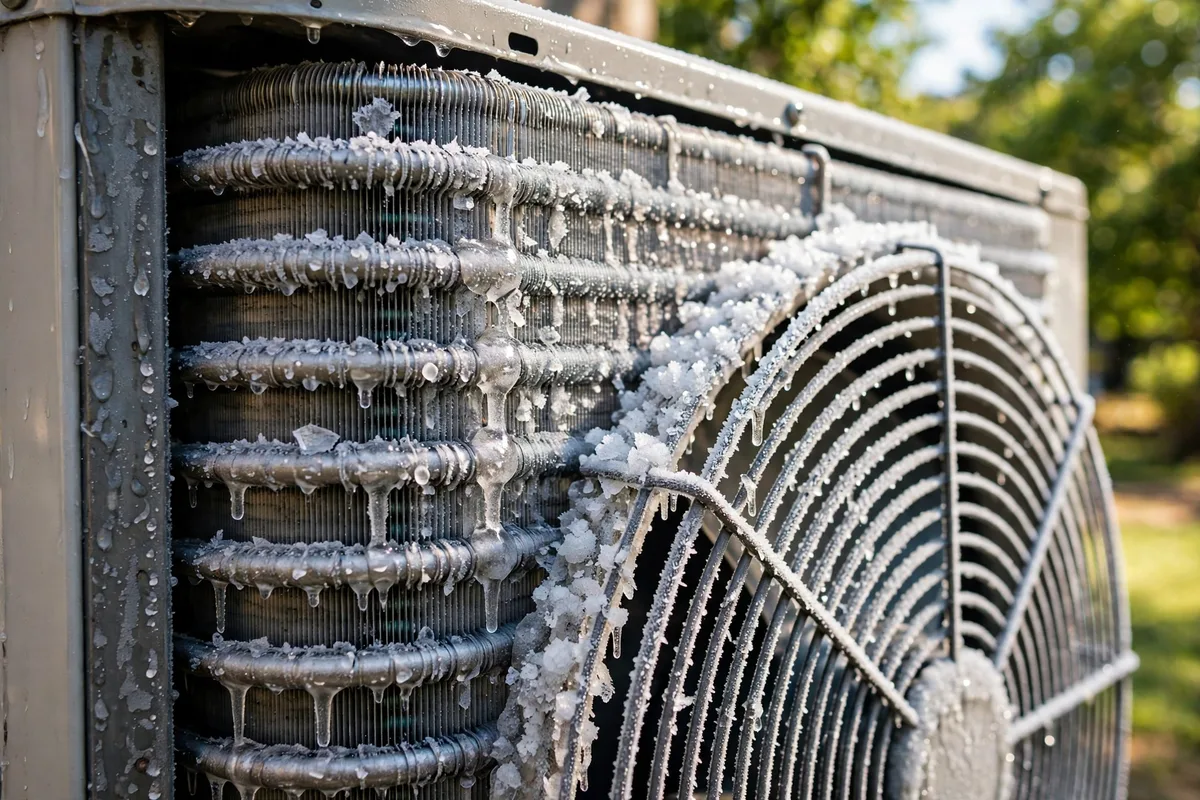
What ice on an AC means
Ice shows up first on the indoor coil, then on the copper lines that run to the outdoor unit. You may see frost on the fat copper line at the outdoor unit, water dripping where ice melts, or warm air from vents that used to blow cool. In a bad freeze, the whole coil turns into a block of ice and the blower pushes almost no air at all.
A frozen coil cannot absorb heat, so the AC runs and runs without cooling the house. The thermostat never reaches its setting, the unit never cycles off, and the ice keeps building. That is why the first step is always to stop the cooling and let the coil thaw, not to set the thermostat lower.
The most common causes
- clogged filter: a dirty filter chokes airflow across the coil, and low airflow is the top cause of freezing.
- closed or blocked vents: too many closed vents starve the coil of warm return air.
- dirty coil: dust and grime on the coil insulate it, so the coil surface runs colder than it should.
- low refrigerant: a leak drops the pressure in the coil, and low pressure means a colder coil.
- blower trouble: a weak or failed blower moves too little air, and the coil ices up fast.
- cool nights: running the AC when outdoor air turns cool can freeze a coil that is already low on airflow.
What to do right now
- Turn the thermostat from cool to off, and set the fan to on. The fan moves room air across the coil and thaws the ice.
- Check the filter and swap in a clean one if it looks dirty.
- Open every vent in the home and move anything that blocks a vent.
- Wait until all ice clears from the coil and lines, which often takes a few hours.
- Turn cooling back on and watch for cold air. If ice returns, call us and leave the unit off.
What we check on a visit
On a freeze-up visit, we check airflow first: filter, blower, ducts, and vents. Then we check the coil for dirt and the refrigerant charge for a leak. A leak needs a repair, not just a top-off, because refrigerant escapes through the same hole again. We also check the thermostat and the outdoor unit for anything that keeps the coil too cold.
Our AC Repair & Installation team handles freeze-ups across Colorado, from Denver condos to mountain cabins. Tell us when the ice started and whether it came back after thawing, and we will trace the cause instead of guessing.
Further reading: The U.S. Department of Energy Energy Saver site explains air conditioner upkeep and airflow basics. U.S. Department of Energy Energy Saver
Frequently Asked Questions
No. Turn the cooling off and run the fan to thaw the coil. Running a frozen unit can strain the compressor and make the ice worse.
Yes. A clogged filter cuts airflow, the coil gets too cold, and moisture on the coil turns to ice. Change the filter before you restart the unit.
Thawing often takes a few hours with the fan running. Wait until all ice clears from the coil and lines before you turn cooling back on.
Mild days still freeze a unit with low airflow or low refrigerant. A clean filter and open vents help, but a repeat freeze needs a check.
Ice on the outdoor unit in summer points to the same airflow and refrigerant causes. In winter, a heat pump ices up as part of normal defrost, which is different.