Air Quality Services
Indoor Air Quality in Colorado
Dry air, dust, and stale air make Colorado homes less comfortable. We install humidifiers, filters, and ventilation that keep indoor air cleaner and steadier.
Colorado indoor air runs dry, dusty, and, in a well-sealed home, stale. Dry air leaves skin and sinuses feeling parched and makes wood floors and furniture shrink and crack. Dust settles fast on every surface. Wildfire smoke drifts in during fire season. And a tight home that never gets fresh air can smell stale by the end of winter.
For the full picture of how we serve homes across the state, see the homepage. This page covers the whole indoor-air picture: humidity, filtration, ventilation, and ducts. For one ventilation unit that swaps stale air for fresh air while holding on to heat and moisture, see ERV installation.
Signs Your Indoor Air Needs Attention
- Dry skin, dry sinuses, and static shocks. The air feels parched, especially in winter.
- Dust that settles fast. Surfaces look dusty again a day after cleaning.
- Stale or lingering odors. Cooking smells, pet odors, and musty air hang around.
- Condensation on windows. Moisture beads on glass in cold weather, or frost forms on panes.
- Visible dust in ductwork. Vents show dust buildup, or a remodel left dust in the ducts.
- Smoke drifting indoors. Wildfire smoke or outdoor haze finds its way inside.
Humidifiers
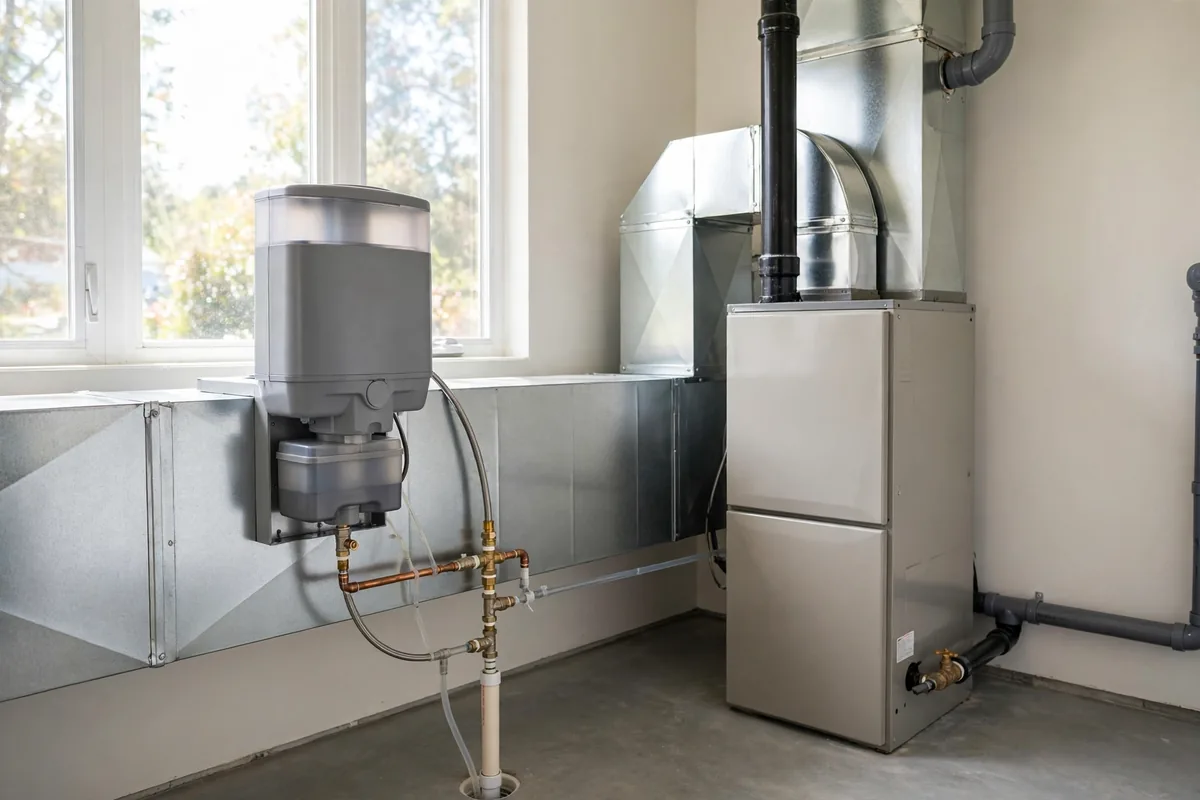
A whole-home humidifier mounts on the ductwork and adds moisture to the air as the furnace runs. It treats the whole house from one unit, unlike a portable humidifier that only covers one room. We size the unit for your home, connect the water line and drain, and set the humidity control.
Filtration
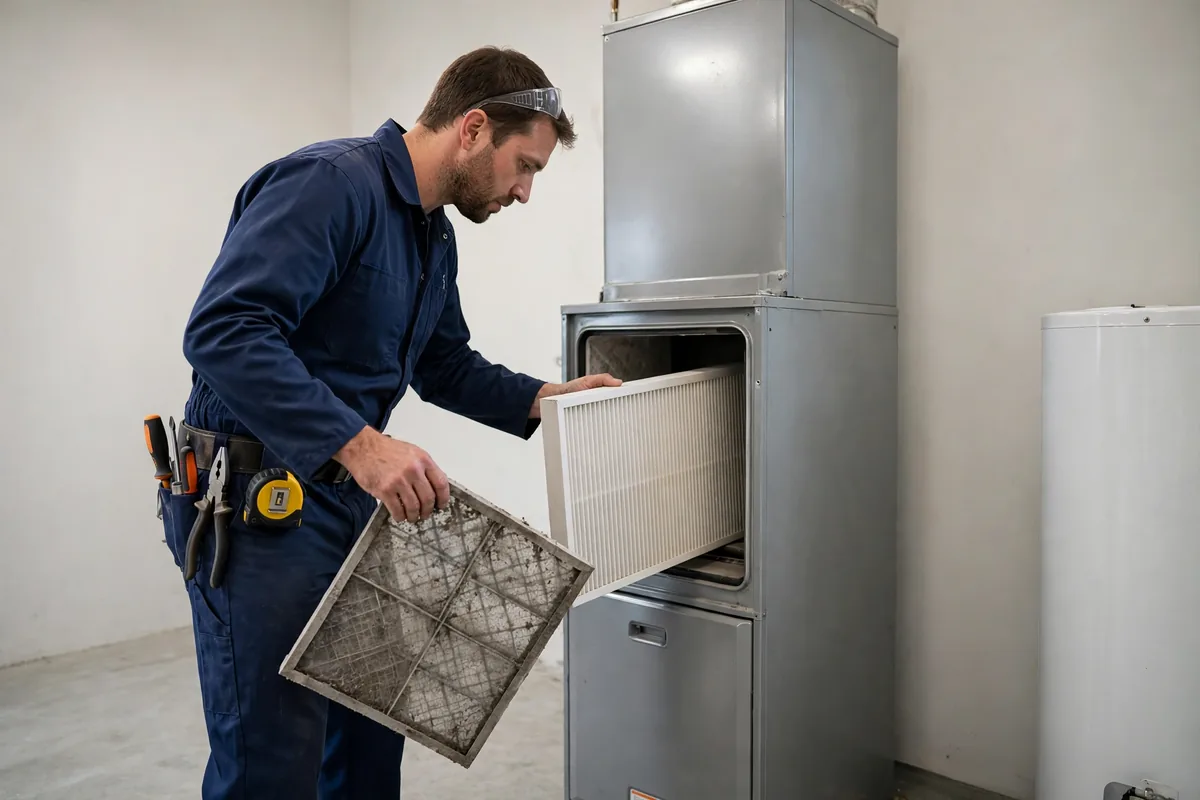
Filtration catches dust, pollen, and smoke particles before they circulate. Options range from high-capacity pleated filters that slide into the furnace to media air cleaners that mount in the ductwork. We match the filter to your system so airflow stays strong while the air runs cleaner.
Ventilation
Ventilation brings in fresh air and pushes stale air out. In a tight home, a little controlled ventilation keeps odors from lingering and keeps carbon dioxide from building up. We look at the home and recommend the setup that fits, from a single ventilation unit to ducted fresh-air intake.
Duct Cleaning
Duct cleaning removes dust and debris from the supply and return ducts and from the vent covers. It helps most after a remodel, after a long stretch without filter changes, or when you can see dust buildup inside the vents. We clean the duct runs, the vent covers, and the area around the furnace, then test airflow so the system moves air as it should.
When Indoor Air Work Fits, and When It Does Not
Indoor air work fits a home that feels dry, dusty, or stale, or a home with a new tight envelope that never gets fresh air. It also fits a home after a remodel, when dust has settled through the ducts.
Indoor air work does not replace repair. A furnace that blows cold air needs furnace repair, not a humidifier. A mini-split that smells musty needs mini-split cleaning, not a filter upgrade. We check the system first and fix the fault before adding indoor-air equipment.
Try This Before You Call
Stuffy air, dust, and dry skin often come down to a filter, humidity, or blocked vents. These checks take a few minutes.
- Filter: pull out the furnace or air-handler filter. If it looks gray and packed, put in a fresh one. It is the first line of defense for indoor air.
- Filter size: check that the new filter matches the size printed on the old one. A wrong-size filter lets air slip around it.
- Humidity: check a simple hygrometer. Below 30% in winter dries skin and wood; above 50% encourages dust mites.
- Returns: make sure return vents are open and not blocked by furniture.
- Bathroom fans and dryer vent: both must exhaust outside, not into the attic. Run the fan during showers and for 20 minutes after.
If the system still will not run right after these checks, call us and describe what you found.
How Indoor Air Quality Work Goes
- You call, we dispatch. Describe what you notice. Dry air, dust, odors, and condensation all point to different fixes.
- We test the full system. We check humidity, airflow, filters, ducts, and ventilation.
- We explain in plain language. We walk you through what we found and lay out the options, including what each one involves for your home.
- We fit parts matched to your system. We mount the unit, connect water, drain, and controls, and run the system through a full cycle.
- We verify before we leave. We show you the upkeep: filter changes, humidity settings, and the cleaning schedule for each piece of equipment.
What You Can Expect
Expect a clear explanation before any work starts. We describe what each option does in plain words, and we never push equipment the home does not need. During an installation, expect the unit to mount on or near the ductwork, with water and drain lines run to match.
After the visit, change filters on the schedule we show you, and keep the humidity setting where we set it through winter. A yearly tune-up checks the humidifier pad, the filter, and the airflow together with the rest of the system.
How Indoor Air Quality Compares With an ERV
Indoor air quality is the whole picture: humidity, filtration, ventilation, and ducts. An ERV is one piece of that picture, a single ventilation unit that swaps stale air for fresh air while holding on to heat and moisture. A home that needs fresh air alone may suit an ERV. A home that also needs humidity and filtration needs the broader work on this page.
Frequently Asked Questions
Aim for indoor air that feels comfortable without leaving condensation on the windows. If moisture beads on glass or frost forms on panes, the humidity is too high for the weather outside. We set the humidifier control for your home and show you how to adjust it as the weather changes.
Dust can come from a clogged filter, leaky ductwork that pulls dust from the attic or crawl space, or ducts that hold dust from a remodel. Check the filter first. If dust keeps coming back fast, the ducts or the filter setup need a check.
Yes. A whole-home humidifier adds moisture to the air as the furnace runs, and it treats the whole house from one unit. It works best when the furnace runs regularly and the home holds a steady humidity setting through winter.
Ducts need cleaning when you can see dust buildup inside the vents, after a remodel, or after a long stretch without filter changes. Most homes do not need cleaning on a set schedule. We look inside the vents and tell you what we see before recommending it.
A filter sits in the furnace and catches particles as air passes through it. An air cleaner mounts in the ductwork and uses a larger media panel or an electronic cell to catch more particles. Both need regular upkeep, and both work best when matched to the system so airflow stays strong.
A stale smell in winter usually means the home is sealed tight and air never turns over. Cooking smells, pet odors, and household chemicals linger because no fresh air comes in. Controlled ventilation or an ERV brings in fresh air and pushes the stale air out.
Last updated: October 16, 2026.
Sources and Further Reading
These government pages explain the same topics in more depth.