Ventilation Services
ERV Installation in Colorado
An energy recovery ventilator brings in fresh air while holding on to heat and moisture. We install ERVs in tight, well-sealed Colorado homes.
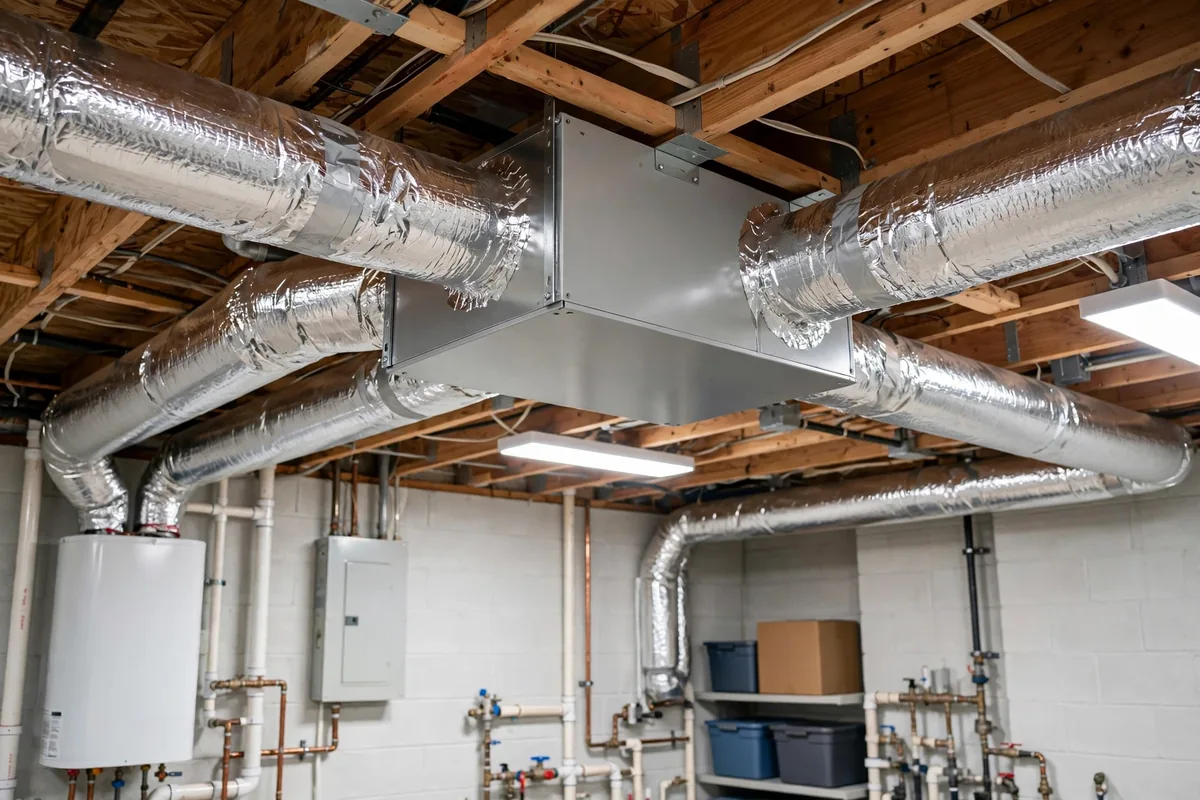
A well-sealed home holds heat well, and it also holds stale air. Cooking smells linger. Bedrooms feel stuffy by morning. Moisture beads on windows. An energy recovery ventilator, or ERV, fixes that trade-off. It pulls stale air out and fresh air in, and it passes the two streams through a core that transfers heat and moisture from one to the other. Fresh air comes in tempered, not cold, and the house keeps its warmth.
For the full picture of how we serve homes across the state, see the homepage. This page covers one ventilation unit. For the whole indoor-air picture, humidity, filtration, ventilation, and ducts, see indoor air quality.
Signs Your Home Needs an ERV
- Stuffy bedrooms. The air feels heavy by morning, even with the door closed.
- Lingering odors. Cooking smells, pet odors, and cleaning products hang around for hours.
- Condensation on windows. Moisture beads on glass in cold weather.
- A new, tightly sealed home. A new build or a deep air-sealing project left the house with little natural air exchange.
- Musty air after a remodel. Paint, adhesives, and new materials leave odors that never clear.
How an ERV Works
An ERV runs two air streams side by side. One stream carries stale indoor air out. The other carries fresh outdoor air in. The streams pass through a core that transfers heat and moisture between them without mixing the air. In winter, the outgoing air warms the incoming air and hands over some of its moisture, so the house stays warm and the air stays from drying out. In summer, the outgoing air cools the incoming air and pulls off some of its moisture.
The ERV ties into the home ductwork or runs its own duct runs, depending on the house. A control sets the run schedule, and filters on both streams keep dust out of the core.
When an ERV Fits, and When It Does Not
An ERV fits a tight, well-sealed home that needs fresh air without losing heat and moisture. It fits new builds, deep air-sealing projects, and homes where bedrooms feel stuffy by morning. It also fits a home with a furnace and ductwork, since the ERV can tie into the existing ducts.
An ERV does not fit a leaky older home that already gets plenty of air through gaps and cracks. That home needs air sealing first, and an ERV after. An ERV also does not heat or cool. A home that needs heating or cooling needs a furnace, a heat pump, or an air conditioner alongside the ERV. And a home that needs humidity or filtration as well as fresh air needs the broader work on the indoor air quality page.
Try This Before You Call
An ERV that seems to do nothing often comes down to a filter, a control, or a blocked intake. These checks take a few minutes.
- Filter: pull out the ERV filter. If it looks gray and packed, clean or replace it. A clogged filter cuts fresh air flow.
- Controls: confirm the ERV is on and set to the right speed and mode.
- Intake hood: clear snow, leaves, and debris from the outdoor intake hood.
- Breaker: if the ERV breaker has tripped, reset it once.
- Symptoms: note whether the trouble is stale air, too much humidity, or noise. That tells us where to look.
If nothing above gets the system running, call us and describe what you found.
How ERV Installation Works
- You call, we dispatch. Describe the symptoms. Stuffy rooms, odors, and condensation all help us plan the visit.
- We test the full system. We look at the home layout, the ductwork, and the mounting space.
- We explain in plain language. We walk you through the options and lay out the unit size and duct plan, including where the unit mounts and where the intake and exhaust go.
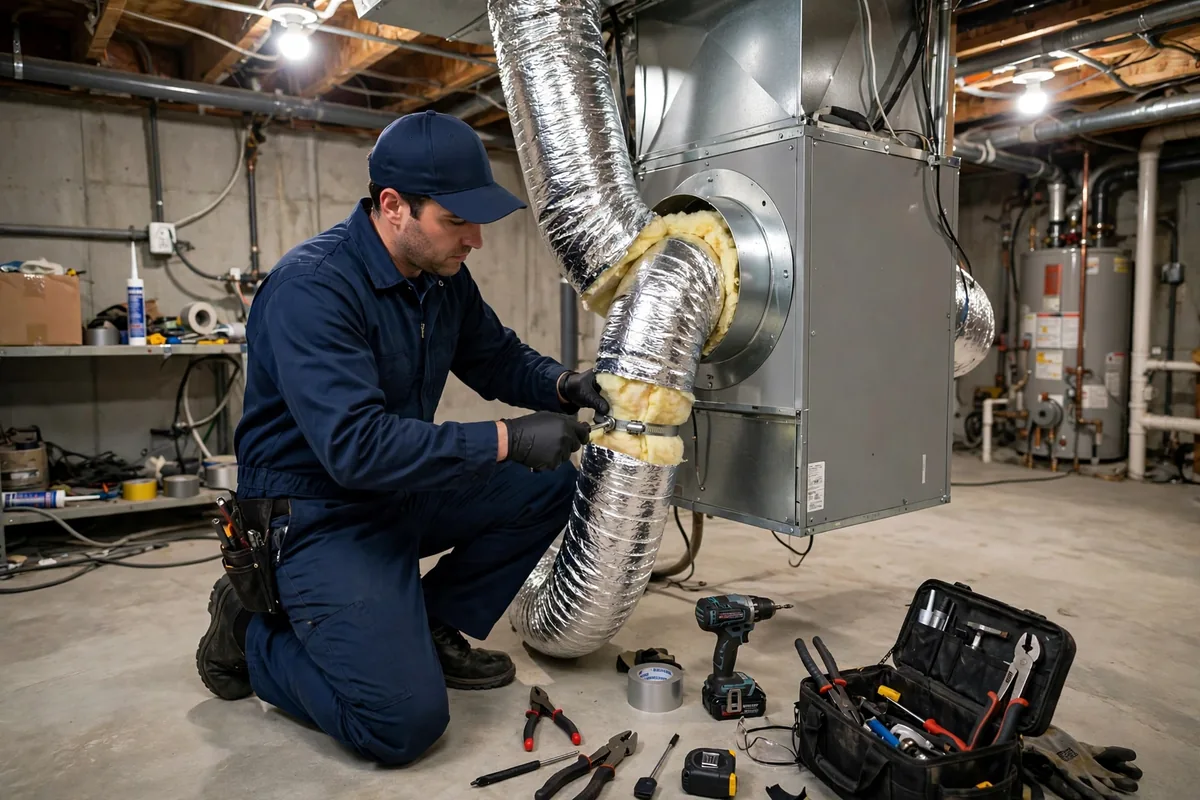
- We fit parts matched to your home. We mount the unit, run the ductwork, connect the intake and exhaust, and wire the control.
- We verify before we leave. We balance the airflow between the two streams, test the controls, and show you the filter access and cleaning schedule.
What You Can Expect
Expect a clear explanation before any work starts. During an installation, expect the unit to mount in the basement, attic, or mechanical room, with duct runs to the intake and exhaust points. Expect us to test the airflow balance and show you the control before we leave.
After the visit, clean or change the filters on the schedule we show you, and keep the intake and exhaust vents clear of snow and debris. A yearly tune-up checks the core, the filters, and the airflow together with the rest of the system.
How an ERV Compares With Other Ventilation
An ERV is one ventilation unit. Indoor air quality is the whole picture: humidity, filtration, ventilation, and ducts. A bath fan exhausts air from one room and pulls replacement air through whatever gaps it finds. An ERV balances the flow, tempers the incoming air, and holds on to heat and moisture. An HRV, a close cousin, transfers heat only, while an ERV transfers heat and moisture.
Frequently Asked Questions
An ERV transfers heat and moisture between the two air streams. An HRV transfers heat only. In a dry climate like Colorado, the moisture transfer matters, since it keeps the house from drying out in winter. We look at the home and recommend the unit that fits it.
No. The outgoing indoor air warms the incoming outdoor air as the two streams pass through the core. Fresh air enters tempered, not cold. The house keeps its warmth while the air turns over.
An ERV mounts in the basement, attic, or mechanical room, wherever the ductwork and the intake and exhaust runs fit best. It needs clear space around it for filter access and service. We look at the house and lay out the mounting spot that fits.
Yes. Condensation forms when moist indoor air hits cold glass. An ERV swaps moist indoor air for fresh outdoor air, which lowers indoor moisture and cuts condensation. If condensation stays heavy, the home may also need a humidity check.
Check the ERV filters every few months and clean or change them when dust builds up. Homes with pets, construction dust, or wildfire smoke need checks more often. We show you the filter access and the cleaning steps during the visit.
Yes. An ERV can tie into the existing ductwork so fresh air moves through the same ducts as heated or cooled air. A home without ductwork can run its own duct runs instead. We look at the house and lay out the setup that fits.
Last updated: October 16, 2026.
Sources and Further Reading
These government pages explain the same topics in more depth.