Boiler Services
Boiler Repair & Installation in Colorado
Boilers heat many Colorado homes through radiators, baseboards, and radiant floors. We repair leaks, pressure trouble, and cold zones, and we install new boilers for homes built around hydronic heat.
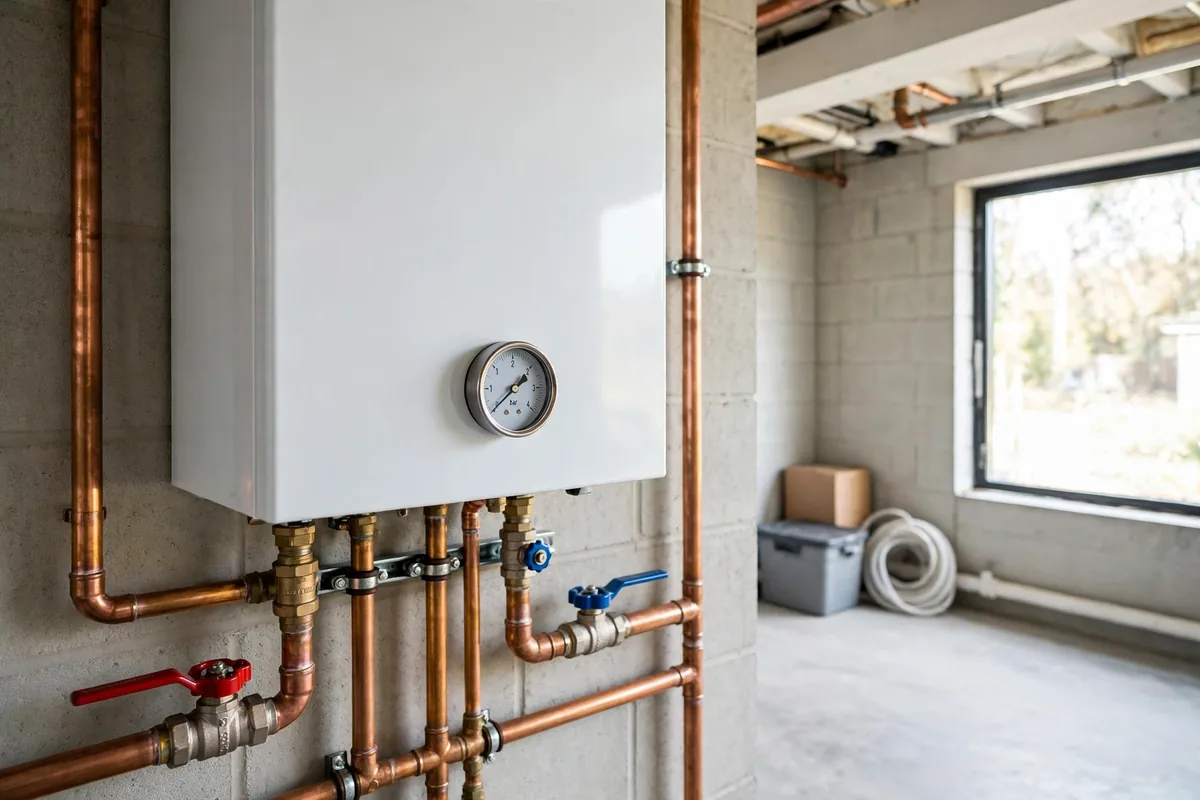
A boiler heats water and sends it through pipes to radiators, baseboards, or radiant floor loops. The heat rises gently from those surfaces instead of blowing through vents, so rooms feel warm without drafts. Many older Colorado homes heat this way, and plenty of newer ones do too, since hydronic heat pairs well with radiant floors and zoned rooms.
For the full picture of how we serve homes across the state, see the homepage. This page covers boilers as the heat source. For the delivery side, the floors, loops, and manifolds that carry that heat into rooms, see radiant and hydronic heating. For homes heated by warm air through ducts, see furnace repair and installation.
Signs Your Boiler Needs Attention
- Cold radiators or baseboards. Some radiators heat while others stay cold, or the whole system feels lukewarm.
- Pressure gauge readings that drift. The needle sits far below or above its normal range, or it swings widely as the boiler runs.
- Water pooling near the unit. Damp spots, drips, or puddles under the boiler or along pipe joints.
- Banging or gurgling sounds. Trapped air or mineral buildup can make the boiler knock as it heats.
- A pilot that will not stay lit. The burner lights, then drops out, or it will not light at all.
- Lukewarm tap water. On a boiler that also makes hot water, the taps run cooler than they should.
Boiler Repair
Boiler repair covers the parts that fail most often: the circulator pump that moves hot water through the loops, the expansion tank that absorbs pressure changes, air vents and bleed valves, pressure relief valves, ignition and pilot parts, and controls and thermostats. We also trace leaks to their source, whether a valve, a joint, or a section of pipe, and we check the venting and flue so exhaust leaves the house as it should.
When a boiler knocks or gurgles, trapped air is often the cause. Bleeding a radiator can quiet it, and our FAQ below walks through that step. When the knock comes from inside the boiler itself, mineral buildup may be at work, and the unit needs a check before the trouble spreads.
When a Boiler Fits, and When It Does Not
A boiler fits a home that already heats with radiators, baseboards, or hydronic loops. It also fits a home adding radiant floors, since the same boiler can feed the new loops. Zoned piping lets each area run its own thermostat, so a cold upstairs and a warm living room can each get what they need.
A boiler does not fit a home that needs cooling from the same system. Boilers heat only, so a home that also wants summer cooling needs a separate cooling system, such as a central air conditioner or a mini-split. A home with ductwork and no radiators usually suits a furnace or a heat pump better.
Try This Before You Call
A boiler that will not heat often comes down to a setting, a switch, or pressure. These checks take a few minutes.
- Thermostat: set to Heat, fan set to Auto, temperature set above the room temperature. If the display is blank, replace the batteries.
- Pressure gauge: read the gauge on the boiler. If it sits near zero or above 30 psi, stop and call us. Do not try to adjust it yourself.
- Emergency switch: the red switch near the boiler must be on.
- Breaker: if the boiler breaker has tripped, reset it once.
- Cold radiators: note which radiators or rooms stay cold. One cold radiator points to that radiator; a cold house points to the boiler.
If nothing above gets the system running, call us and describe what you found.
How Boiler Repair and Installation Work
- You call, we dispatch. Describe the symptoms. Pressure readings, sounds, and which rooms feel cold all help us send the right technician.
- We test the full system. We check pressure, the expansion tank, the circulator pump, air vents, valves, ignition, and venting.
- We explain in plain language. We walk you through what we found and lay out repair or replacement, including what each option involves for your piping and radiators.
- We fit parts matched to your boiler. Repairs restore the failed part and rebalance the system. Installations set a new boiler sized for your home and loops, with piping, venting, and controls matched to the house.
- We verify before we leave. We run the boiler through a full cycle, check each zone for even heat, and show you the pressure gauge, the fill valve, and how to bleed a radiator.
What You Can Expect
Expect a clear explanation before any work starts. We show you the pressure gauge and explain what the reading means for your system. During an installation, expect the old unit to come out, the new unit to go in, and each zone to get tested before we leave.
After the visit, glance at the pressure gauge from time to time and note any drips under the boiler or along the pipes. A yearly tune-up keeps pressure steady, catches small leaks early, and keeps each zone heating evenly through winter.
How a Boiler Compares With Other Heating Options
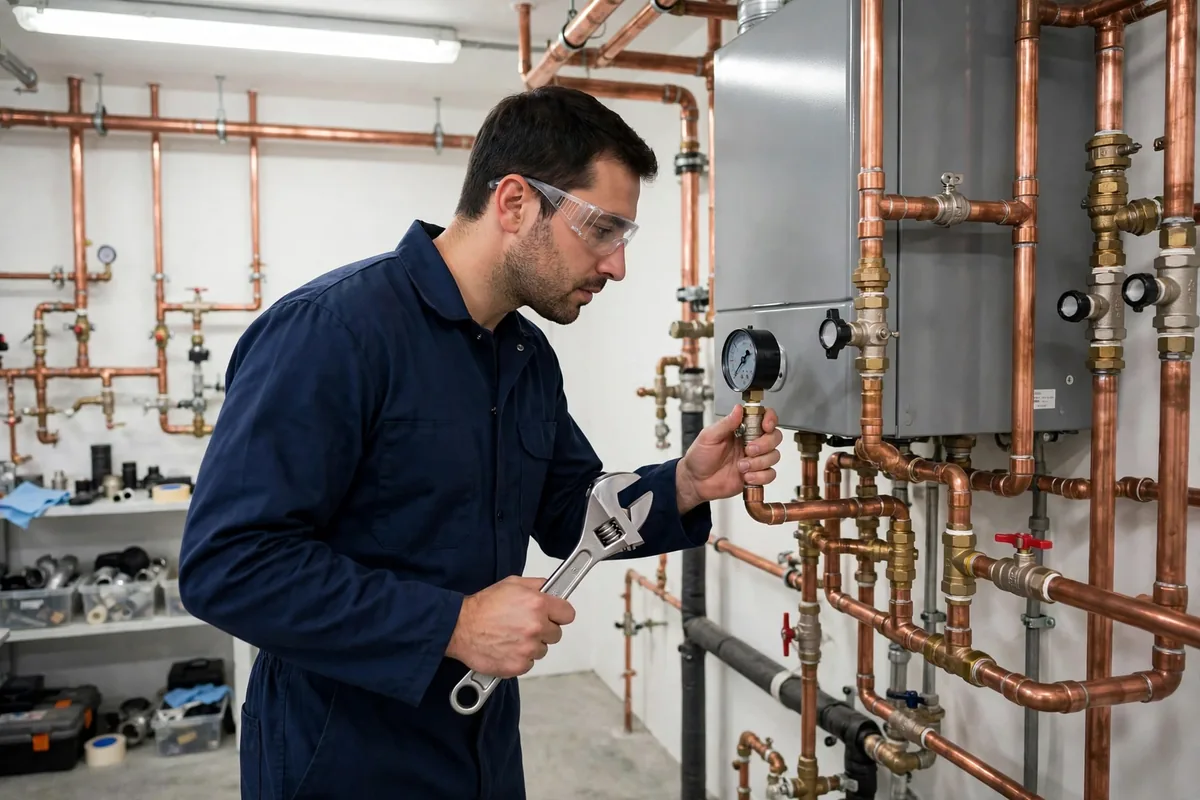
A boiler is a heat source. It makes hot water. Radiant and hydronic heating is the delivery side: the loops, manifolds, and floors that carry that hot water into rooms. A furnace heats air instead of water and moves it through ducts. A heat pump moves heat in and out of the home and cools in summer too.
If your heat fails without warning on a cold night, see emergency HVAC repair.
Frequently Asked Questions
Cold radiators usually mean trapped air, a stuck valve, or a loop that is out of balance. Bleeding the cold radiator often fixes trapped air. If the radiator stays cold after bleeding, the valve, the piping, or the circulator pump needs a check.
Low pressure often means the system lost water through a small leak or an air vent. Look for damp spots under the boiler and along the pipes. Do not keep adding water without finding the cause, since fresh water brings in minerals that build up inside the boiler. Call us and tell us the gauge reading.
Banging usually comes from trapped air in the pipes or from mineral buildup inside the boiler. Trapped air can make pipes knock as water moves through them. Buildup can make the boiler itself knock as it heats. Bleeding the radiators helps with air, but a boiler that keeps knocking needs a check.
Turn the boiler off and let the radiators cool. Hold a small container under the bleed valve at the top end of the radiator, then open the valve with a radiator key until water runs out in a steady stream. Close the valve, wipe the area dry, and check the boiler pressure gauge afterward.
Water under a boiler can come from a leaking valve, a pipe joint, the pressure relief valve, or the boiler itself. Place a container under the drip, note where the water comes from, and check the pressure gauge. Call us and describe what you see so we can trace the leak.
Some boilers do both. A combination boiler heats the home through radiators or loops and also heats tap water on demand. A standard boiler heats the home only, and a separate water heater handles the taps. Tell us which setup you have when you call so we can check the right parts.
Last updated: October 16, 2026.
Sources and Further Reading
These government pages explain the same topics in more depth.