Ductless Heating & Cooling
Ductless Mini-Split Services in Colorado
Mini-splits heat and cool rooms without ductwork. We install new units and service ones that leak, smell musty, or leave rooms uneven.

A ductless mini-split pairs one outdoor unit with one or more indoor wall units. Each indoor unit heats and cools its own room, and each room gets its own thermostat setting. No ductwork runs through the walls, so rooms that the main system never reached can finally hold a steady temperature.
For the full picture of how we serve homes across the state, see the homepage. This page covers ductless zoned systems for single rooms and small sets of rooms. For whole-home ducted heating and cooling, see heat pump installation and repair or AC repair and installation.
Signs Your Mini-Split Needs Attention
- Musty smell at startup. The unit blows a stale or sour smell for the first minutes after it starts.
- Water dripping from the indoor unit. Damp spots on the wall or drips from under the wall unit.
- Weak airflow. The unit runs, but the room barely warms or cools.
- Blinking lights or error codes. The indoor unit flashes a pattern or shows a code.
- A unit that will not switch modes. The system stays in cooling when it should heat, or the reverse.
- One room that never feels even. A zone runs far hotter or colder than its thermostat setting.
Mini-Split Repair
Mini-split repair covers the faults that show up in zoned systems: refrigerant leaks at line connections, condensate drain blockages, failed sensors, blower trouble, and control or remote problems. We test the affected zone, find the fault, and explain it before any work starts.
Mini-Split Cleaning
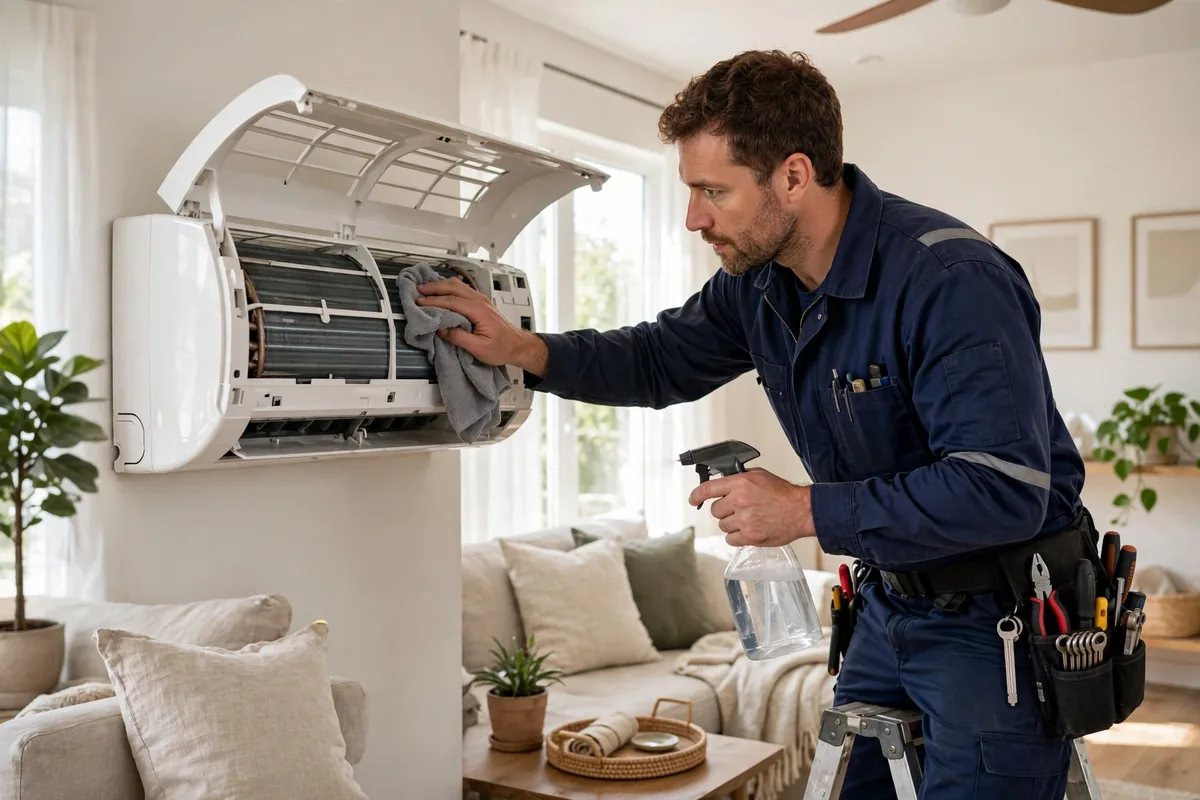
Mini-split cleaning keeps the indoor unit fresh and the airflow strong. We clean the filters, the blower wheel, and the coil, clear the condensate drain, and wipe down the housing. A musty smell often comes from dust and moisture on the coil, and a full cleaning clears it. Cleaning also keeps the drain flowing so water does not drip down the wall.
When a Mini-Split Fits, and When It Does Not
A mini-split fits rooms without ductwork: additions, finished basements, garages turned into living space, and older homes where ducts never ran. It also fits a home where one or two rooms always run hot or cold while the rest feel fine, since a single zone can fix that room without changing the main system.
A mini-split does not fit a home that wants even cooling in every room from one system and already has ductwork. In that case, central AC or a ducted heat pump usually makes more sense. A home with radiators and no cooling may suit a mini-split for cooling alone, while the boiler keeps handling heat.
Try This Before You Call
A mini-split that will not heat or cool often comes down to the remote, the filters, or a tripped breaker. These checks take a few minutes.
- Remote: replace the batteries. Confirm the mode is Heat or Cool, not Fan or Dry, and the set temperature is right.
- Indoor filters: slide them out of each wall unit, rinse and dry them, and slide them back in. Dirty filters cut airflow fast.
- Outdoor unit: clear snow, leaves, and debris from around it, and keep open space on all sides.
- Breaker: if the mini-split breaker has tripped, reset it once.
- Airflow: make sure curtains and furniture are not blocking the indoor unit.
If nothing above gets the system running, call us and describe what you found.
How Mini-Split Installation and Service Work
- You call, we dispatch. Describe the room, the trouble, and how the current system treats it.
- We test the full system. We look at the room size, the wall space, the outdoor unit location, and the electrical supply.
- We explain in plain language. We walk you through the options and lay out the zone plan, including where each indoor unit mounts and how the lines run.
- We fit parts matched to your mini-split. Installations mount the indoor unit, set the outdoor unit, run the line set and drain, and wire the controls. Repairs restore the failed part and test the zone.
- We verify before we leave. We run every indoor unit in heating and in cooling, check airflow and temperature, and show you the remote and filter access.
What You Can Expect
Expect a clear explanation before any work starts. During an installation, expect a small line set run from the outdoor unit to each indoor unit, and a drain line that carries condensate outside. During a cleaning, expect the indoor unit to open up, the filters and coil to get cleaned, and the drain to get cleared.
After the visit, clean the filters on the schedule we show you, and keep the outdoor unit clear of snow, leaves, and plants. A yearly tune-up checks refrigerant charge, drains, and airflow for every zone.
How a Mini-Split Compares With Other Systems
A mini-split is a ductless zoned system. A ducted heat pump heats and cools a whole home through ducts, while a mini-split serves single rooms or zones without ducts. A central AC cools only and needs ducts. A furnace heats only and needs ducts.
Frequently Asked Questions
One outdoor unit can serve several indoor units, and each indoor unit covers its own room or zone. The right count depends on the room sizes, the layout, and the capacity of the outdoor unit. We look at the rooms and lay out a zone plan that fits the house.
A musty smell usually comes from dust and moisture on the indoor coil and blower wheel. The smell shows up strongest at startup, when the fan first moves air across the coil. A full cleaning of the filters, coil, and drain clears it.
Water drips when the condensate drain clogs or the unit sits out of level. Dust and slime build up in the drain over time and block the flow. We clear the drain, check the slope of the unit, and test the flow before we leave.
Yes. Mini-splits heat by moving heat from the outside air indoors, and cold-climate models keep heating through Colorado winters. The outdoor unit will frost up and run defrost cycles in damp cold. Keep snow clear of the unit and call us if thick ice stays put.
Check the filters each month and clean them when dust builds up. Homes with pets or construction dust need cleaning more often. The indoor unit filter slides out by hand, and we show you how during the visit.
A blinking light means the unit has logged a fault, and the blink pattern points to the fault type. Note the pattern and the timing, then call us and describe it. Do not keep resetting the unit without finding the cause, since the fault will come back.
Last updated: October 16, 2026.
Sources and Further Reading
These government pages explain the same topics in more depth.