Furnace Noises
Why Your Furnace Is Loud
Every furnace sound points somewhere. A bang, a squeal, a rumble, and a rattle each trace to a different part. Learn what each one means.
Last updated: October 16, 2026.
A furnace should hum quietly in the background, not announce itself. When a new sound shows up, it carries a clue about which part struggles. A bang at startup points one way, a squeal points another, and a rattle points somewhere else entirely. Learning the sounds helps you describe the fault and decide how fast to call.
This guide covers the common furnace sounds, what each one means, what you can check, and when noise means stop and call. Note when the sound starts, whether it repeats, and what the furnace does next, because that pattern guides the fix.
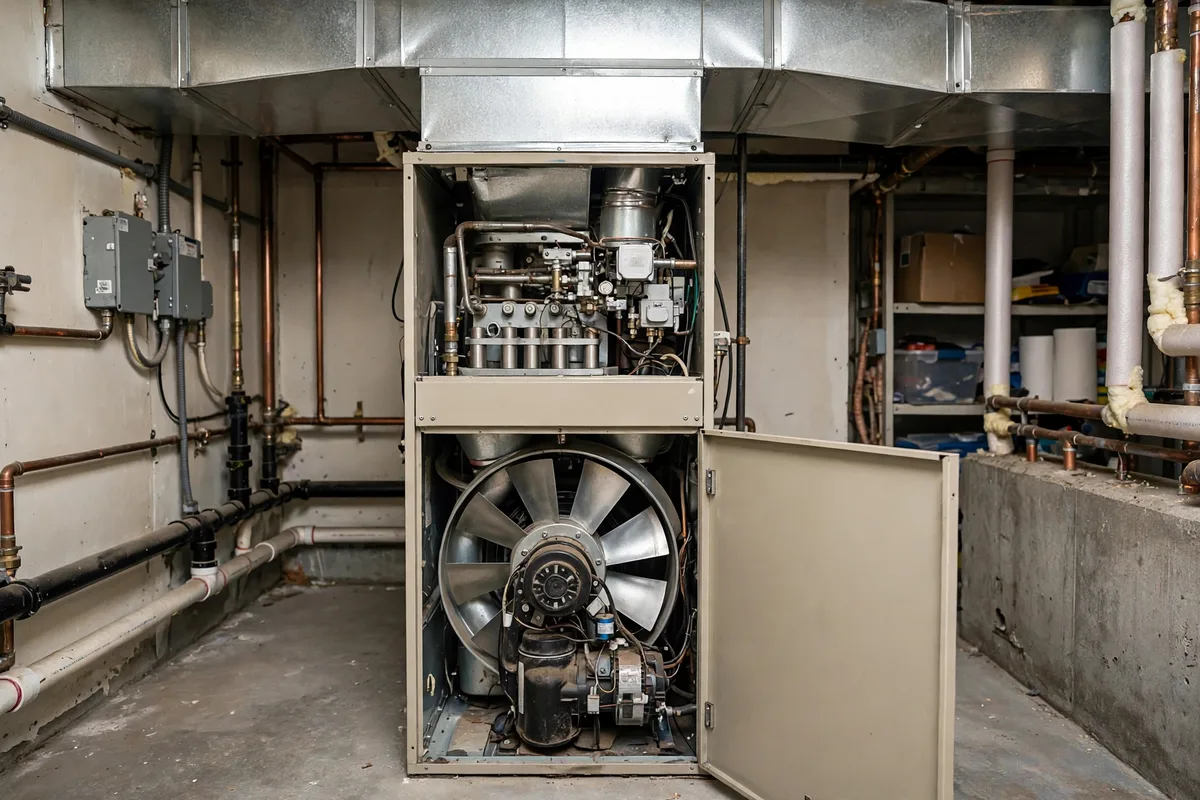
What each sound means
- bang at startup: delayed ignition, where gas builds up before it lights, or ducts popping as they expand with heat.
- squeal: a worn blower belt or dry blower bearings that cry as the blower spins.
- rumble: a dirty burner or a burner that burns unevenly, so the flame roars instead of burning smooth.
- rattle: a loose panel, a loose duct joint, or a loose blower wheel shaking as air moves.
- hum: a soft hum from the blower and transformer is normal, while a loud or new hum points to a motor or electrical part.
- scrape: metal on metal, often a blower wheel rubbing its housing, which needs a fast check.
- click: a few clicks at startup and shutdown are normal as relays and metal expand, while rapid clicking points to a control or ignition fault.
What you can check
Start with the easy checks. Tighten the screws on the furnace front panel, because a loose panel rattles with every blower run. Swap in a clean filter, because a clogged filter strains the blower and can add a whistle or a hum. Open every vent, because closed vents raise pressure in the ducts and can make them pop and bang.
Then listen with care. Stand near the furnace for one full heating cycle and note when the sound starts: at ignition, while the blower runs, or at shutdown. A sound at ignition points to the burners. A sound that follows the blower points to the blower or the ducts. That timing tells a technician where to look first.
Sounds that come from ducts, not the furnace
Not every furnace sound starts at the furnace. Ducts pop and ping as they heat up and cool down, because sheet metal expands and contracts with temperature. A single pop at startup and another at shutdown is normal duct noise, and it fades as the ducts settle.
Ducts also whistle when a vent sits half closed or a filter clogs, because air squeezes through a narrow gap. A whistle that follows a filter change or a vent adjustment points to airflow, not to a failing part. Open the vents, swap the filter, and listen again before you call.
When noise means stop and call
Call us when a bang follows every startup, when a scrape or grinding sound shows up, or when a rumble comes with a yellow burner flame or soot marks. Those signs point to ignition trouble, a blower fault, or a combustion fault. Turn the thermostat down and leave the furnace off until we check it when you smell gas or see soot.
Our Furnace Repair & Installation team checks ignition, burners, blowers, and ducts on every noise call. Tell us what the sound is, when it starts, and what the furnace does next, and we will trace it from there.
Further reading: The U.S. Department of Energy Energy Saver site covers heating upkeep and when a system needs a check. U.S. Department of Energy Energy Saver
Frequently Asked Questions
A bang at startup often comes from delayed ignition or expanding ducts. Duct pops are harmless, while ignition bangs need a check.
A squeal often comes from a worn blower belt or dry blower bearings. The sound grows as the part wears, so a check now beats a breakdown later.
Loose panels, loose duct joints, or a loose blower wheel rattle as air moves. Tighten the panel screws first, then call if the rattle stays.
A soft hum from the blower and transformer is normal. A loud or new hum points to a motor or electrical part that needs a check.
A few clicks at startup and shutdown are normal as relays and metal expand. Rapid or constant clicking points to a control or ignition fault.