Winter Furnace Prep
Get Your Furnace Ready for Winter
Fall is the time to prep your furnace, before the first cold snap tests it. A short checklist covers filters, vents, and safety checks.
Last updated: October 16, 2026.
A furnace that sat quiet all summer can surprise you on the first cold night. Dust settles on parts, filters clog, and small faults wait for the first long heating run to show up. A fall check finds them while the weather still gives you time to fix them.
This guide walks through a homeowner checklist you can finish in an afternoon, then explains what a tune-up covers that you cannot see from the outside. Do the homeowner steps first, and book a tune-up when anything looks or sounds off.
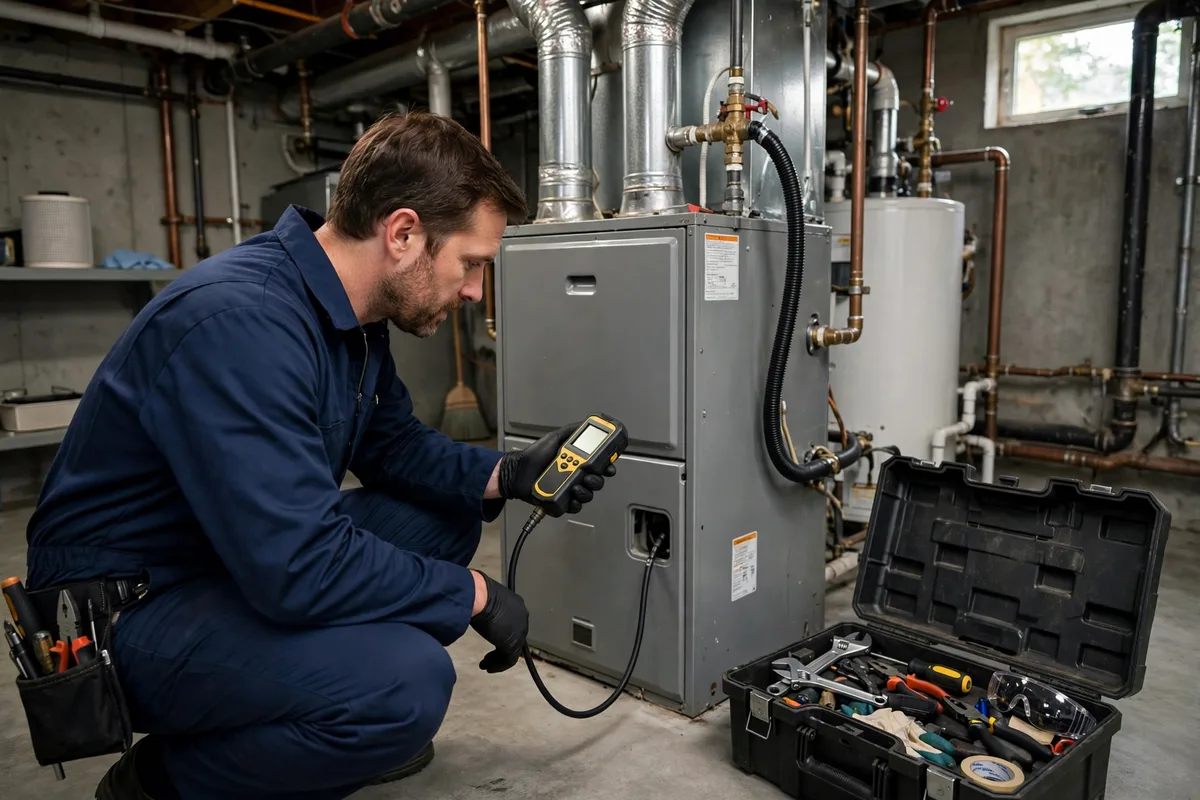
Start early, before the cold
Book your prep for early fall, when days still run mild and technicians still have open slots. A furnace check in September or October leaves room to order a part before a cold snap hits. A furnace check in January, after the cold arrives, leaves no such room.
Early prep also lets you test the system on your terms. Run the furnace for a full cycle on a mild day, listen for new sounds, and check every room for warm air. A test run in fall beats a breakdown at midnight in January, when the house cools fast and every neighbor calls at once.
The fall checklist
- Change the filter. A clean filter keeps airflow easy and protects the blower and coil. If you cannot see light through the old filter, it was overdue.
- Open every vent. Walk the house, open each supply vent, and move rugs, couches, and boxes off vents and returns.
- Test the thermostat. Set it to heat, raise the setting a few degrees, and confirm the furnace fires and warm air reaches the vents. Swap thermostat batteries if the display looks dim.
- Clear the area around the furnace. Keep boxes, paint cans, and clutter at least a few feet from the unit so air can move and a technician can reach it.
- Check the vent outside. Walk outside and confirm the exhaust vent stays clear of leaves, nests, and snow. A blocked vent can shut the furnace down.
- Test carbon monoxide detectors. Press the test button on each detector and swap batteries or the unit when it fails to sound.
- Book a tune-up. A technician checks burners, ignition, safety controls, and gas connections that a homeowner cannot see.
What a tune-up covers
A tune-up looks inside the furnace. The technician cleans the flame sensor, checks ignition, tests safety controls, inspects the heat exchanger for cracks, and checks gas connections for leaks. The blower gets a check for dirt and wear, the motor gets a listen for bearing noise, and the filter gets a swap when it needs one.
The tune-up also checks the ductwork that carries heat to your rooms. Leaky ducts spill warm air into crawl spaces and attics, and a loose duct joint can starve a whole branch. Our Maintenance & Tune-Ups page covers what a visit includes for furnaces, heat pumps, boilers, and air conditioners.
If your furnace sat unused all summer
A furnace that sat unused all summer may smell dusty on its first fall run. Dust settles on the heat exchanger and burns off in the first heating cycle or two, and the smell should fade. A smell that lingers, or a smell like gas, needs a check instead of patience.
A pilot light that will not stay lit, a furnace that fires and shuts off within seconds, or a new banging sound also need a visit. Those faults point to ignition, flame sensor, or safety control trouble. Our Furnace Repair & Installation team fixes those faults across Colorado, and a fall visit beats a winter breakdown.
Further reading: The Ready.gov winter weather guide covers home prep and cold-weather safety steps for the season. Ready.gov winter weather guide
Frequently Asked Questions
Early fall, before the first cold snap. A fall check leaves time to fix parts before you need heat every night.
Yes, for the basics. Change the filter, clear vents, test the thermostat, and check detectors. Leave burner and gas work to a technician.
Dust settles on the heat exchanger over summer and burns off on the first fall run. The smell should fade within a heating cycle or two.
No. A furnace needs airflow and a dry space. Keep the area around it clear all year instead of covering it.
Change the filter, set the thermostat to heat, and listen for smooth startup. Call us if it bangs, smells like gas, or will not light.