Cold-Climate Heat Pumps
Do Heat Pumps Work in Colorado Winters?
Yes, heat pumps heat Colorado homes through winter when sized for cold weather. Here is how they handle snow, ice, and thin mountain air.
Last updated: October 16, 2026.
Heat pumps work in Colorado winters. Cold-climate models keep pulling heat from outdoor air well below freezing, and they heat Front Range homes through most winter days without help. The catch is sizing. A heat pump sized for mild weather will struggle on the coldest nights, while one sized for Colorado cold will hold steady.
Colorado adds three twists that heat pumps must handle: deep cold in mountain towns, snow and ice that bury outdoor units, and thin air at altitude. This guide explains each one, so you can judge whether a heat pump fits your home.
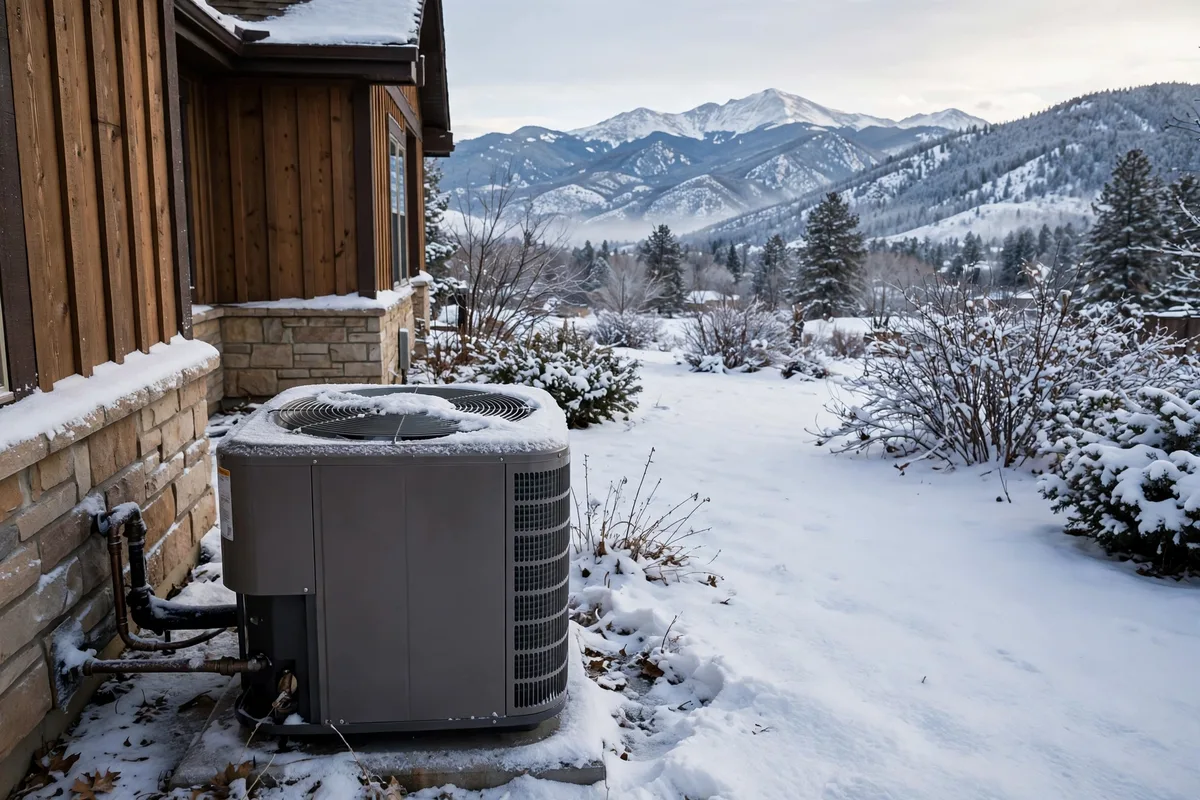
How a heat pump pulls heat from cold air
A heat pump moves heat instead of making it. Refrigerant in the outdoor coil picks up heat from outdoor air, the compressor squeezes that heat to a higher temperature, and the indoor unit releases it into your home. Even air that feels bitterly cold still holds heat, and the system keeps harvesting it as long as air moves across the coil.
That is why a heat pump feels different from a furnace. A furnace sends hot blasts through the vents in short bursts. A heat pump sends a steady stream of warm air for longer stretches, and the air from the vent feels cooler than furnace air even while the room warms up. New owners often mistake that steady warm air for weak heat, when the system is working as designed.
Snow, ice, and the defrost cycle
Frost builds on the outdoor coil as a heat pump runs in cold, damp air. The unit handles this with a defrost cycle: it briefly reverses, melts the frost, and goes back to heating. You may see steam rise from the unit and hear it pause for a minute or two. That is normal, and the unit returns to heating on its own.
Deep snow is the real threat. A unit buried in a drift cannot pull air through the coil, and ice from a dripping gutter can coat the fan. Keep snow clear for a couple of feet around the unit, and keep gutters from dripping onto it. If ice locks the fan or coats the coil thick, call us instead of chipping at it, because the coil and fan bend easily.
Altitude and dry air
Thin air at altitude carries less heat per cubic foot, so a heat pump in Leadville or Breckenridge moves less heat than the same unit in Denver. Sizing must account for elevation, and a unit that looks right on paper for sea level may run short on a mountain night. Tell your installer the home elevation and the coldest nights you see, not just the town average.
Dry air helps in one way and hurts in another. Dry air makes less frost on the coil, so defrost cycles run less often. Dry air also makes a home feel colder at the same thermostat setting, because it pulls moisture from skin. A whole-home humidifier, covered in our Indoor Air Quality service, keeps winter air comfortable while the heat pump runs.
When backup heat helps
Backup heat covers the coldest nights when the heat pump alone cannot keep up. In a dual-fuel home, a gas furnace takes over below a set outdoor temperature. In an all-electric home, electric resistance heat fills the gap. Either way, the backup should size for the coldest night, not for an average winter day.
Backup heat also saves the day during a defrost-heavy stretch or a power-hungry cold snap. If your heat pump runs nonstop and rooms still cool off, the backup may be undersized or off. Our Heat Pump Installation & Repair team checks sizing, backup heat, and defrost controls on every winter visit.
Keeping your heat pump steady all winter
- clear snow and leaves from around the outdoor unit after every storm.
- change the indoor filter on schedule so air moves without trouble.
- keep gutters from dripping onto the outdoor unit.
- set the thermostat and leave it steady instead of swinging it up and down.
- book a fall tune-up so the defrost cycle, refrigerant charge, and backup heat get checked before winter.
Further reading: The U.S. Department of Energy Energy Saver site covers heat pump basics and cold-weather upkeep. U.S. Department of Energy Energy Saver
Frequently Asked Questions
No. Cold-climate heat pumps keep heating well below freezing. Output drops as the air gets colder, so sizing and backup heat matter in mountain towns.
A heat pump blows air that feels cooler than furnace air because it heats with a steady stream instead of hot blasts. If the air stays cool and rooms stay cold, the unit may need a check.
Defrost cycles run as needed when frost builds on the outdoor coil. Short steam bursts and brief pauses are normal. Long ice buildup is not.
Deep snow can block airflow and bury the unit. Keep snow clear around it and keep gutters from dripping onto it.
In many Front Range homes, yes, when sized for the coldest days. In higher mountain towns, a furnace backup often covers the coldest snaps.