Home Humidification
Dry Air in Colorado: Do You Need a Humidifier?
Colorado air runs dry all year, and winter makes it worse. A whole-home humidifier helps when dry air cracks woodwork, dries skin, and makes rooms feel colder than the thermostat says.
Last updated: October 16, 2026.
Colorado sits high, dry, and sunny, and the air shows it. Winter air holds little moisture to start with, and heating that air dries it further. The result is static shocks, cracked lips, dry sinuses, and wood floors that gap by February. A humidifier puts moisture back, and the right one keeps the whole home steady instead of one room.
This guide explains why Colorado air runs dry, the signs that your home needs help, and the difference between a room humidifier and a whole-home unit. It ends with how to keep humidity in balance, because too much moisture brings its own problems.
Why Colorado air runs dry
Cold air holds less moisture than warm air, and Colorado winter air starts dry. When a furnace warms that air, the relative humidity falls further, because warm air can hold more moisture than the cold air it came from. The air then pulls moisture from everything it touches: skin, wood, plants, and even the wood framing inside walls.
Altitude adds to the effect. Thin air at 5,000 feet and above feels sharper on skin and sinuses, and many Front Range homes sit at or above a mile high. Mountain towns sit higher still. Add a leaky home that swaps indoor air for dry outdoor air all winter, and humidity drops low enough to notice every day.
Signs your home air is too dry
- static shocks when you touch a light switch, a pet, or a doorknob.
- dry, cracked skin, chapped lips, and itchy eyes that ease when you leave the house.
- nosebleeds or a dry, scratchy throat in the morning.
- wood floors that gap, doors that shrink, and furniture joints that loosen.
- houseplants with brown leaf tips even when you water them.
- a home that feels chilly at a thermostat setting that used to feel fine.
Room humidifier vs. whole-home humidifier
A room humidifier sits on a table or floor, fills from a tank, and moistens one room. It helps a bedroom or a nursery, and it costs little to run. It also needs daily filling, weekly cleaning, and a watchful eye, because a dirty tank can grow mold and mist it into the room.
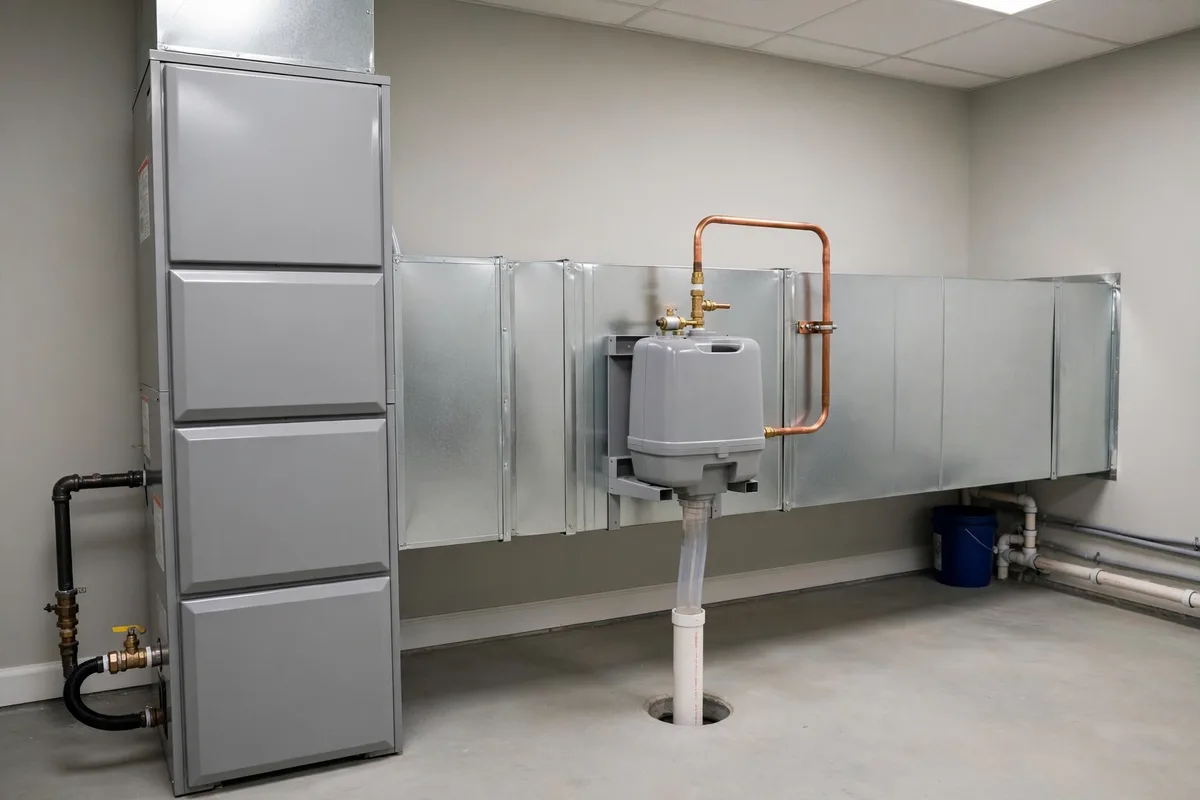
A whole-home humidifier mounts on the furnace ductwork and ties into a water line. The furnace blower spreads moist air to every room through the ducts, and a humidistat holds the level steady without daily filling. It suits homes where dry air bothers every room, not just one. Our Indoor Air Quality page covers whole-home humidifiers and other air treatments we install.
What a whole-home humidifier does
A whole-home humidifier adds a controlled stream of moisture to the air as it passes through the ducts. A pad or panel wets with water, warm air crosses it, and the air carries that moisture to every room. The humidistat reads indoor humidity and shuts the unit off when the level hits the target, so the home holds steady instead of swinging wet and dry.
Steady humidity helps the whole home. Skin and sinuses stay comfortable, wood floors and furniture hold their shape, and rooms feel warmer at the same thermostat setting. That last point matters in winter, because a home that feels warmer at a lower setting runs the furnace less. The humidifier needs a seasonal check: clean or swap the pad, check the water line, and confirm the humidistat reads true.
Keeping humidity in balance
Too much humidity brings wet windows, musty corners, and mold on cold surfaces. Watch the windows on a cold morning. Light fog that clears is normal, while steady drips and wet sills mean the setting runs too high. Turn the humidistat down a notch and check again the next morning.
A simple hygrometer, which reads indoor humidity, takes the guesswork out. Keep one in a main room and check it when the weather shifts. If you see mold, peeling paint, or wet insulation, call us before the moisture damages the home. Our team checks humidifiers, ducts, and ventilation together, because all three shape the air you breathe.
Further reading: The U.S. Environmental Protection Agency indoor air quality guide covers humidity, ventilation, and pollutant sources at home. U.S. Environmental Protection Agency indoor air quality guide
Frequently Asked Questions
Most homes feel best in a middle range that keeps skin and woodwork comfortable without wet windows. A hygrometer shows where your home sits.
Yes. Dry air pulls moisture from wood, so floors can gap and furniture joints can loosen. Steady humidity protects woodwork through winter.
Dry air dries nasal passages and makes them crack. Moister air often eases that dryness, though a doctor should check repeat nosebleeds.
Yes. The pad or panel needs cleaning or replacement and the water line needs a check each season. A yearly visit keeps it clean and steady.
Yes, when a humidifier runs too high or a home seals tight. Wet windows and musty corners signal excess moisture, so turn the setting down.