Frozen Pipe Prevention
How to Keep Pipes From Freezing
Pipes freeze where cold air reaches them: outside walls, crawl spaces, attics, and garages. Insulate them, seal the drafts, and keep a slow drip on a bitter night.
Last updated: October 16, 2026.
A frozen pipe is more than a cold shower. Water expands as it freezes, pressure builds behind the ice, and the pipe can split. The real damage comes when the ice thaws and water pours through the split into walls, floors, and ceilings. A few hours of prep in fall prevents a flood in January.
This guide covers where pipes freeze first, how to keep them warm, what to do on a bitter night, and how to handle a pipe that already froze. It covers water pipes, not heating equipment, and a plumber handles burst pipes once they split.
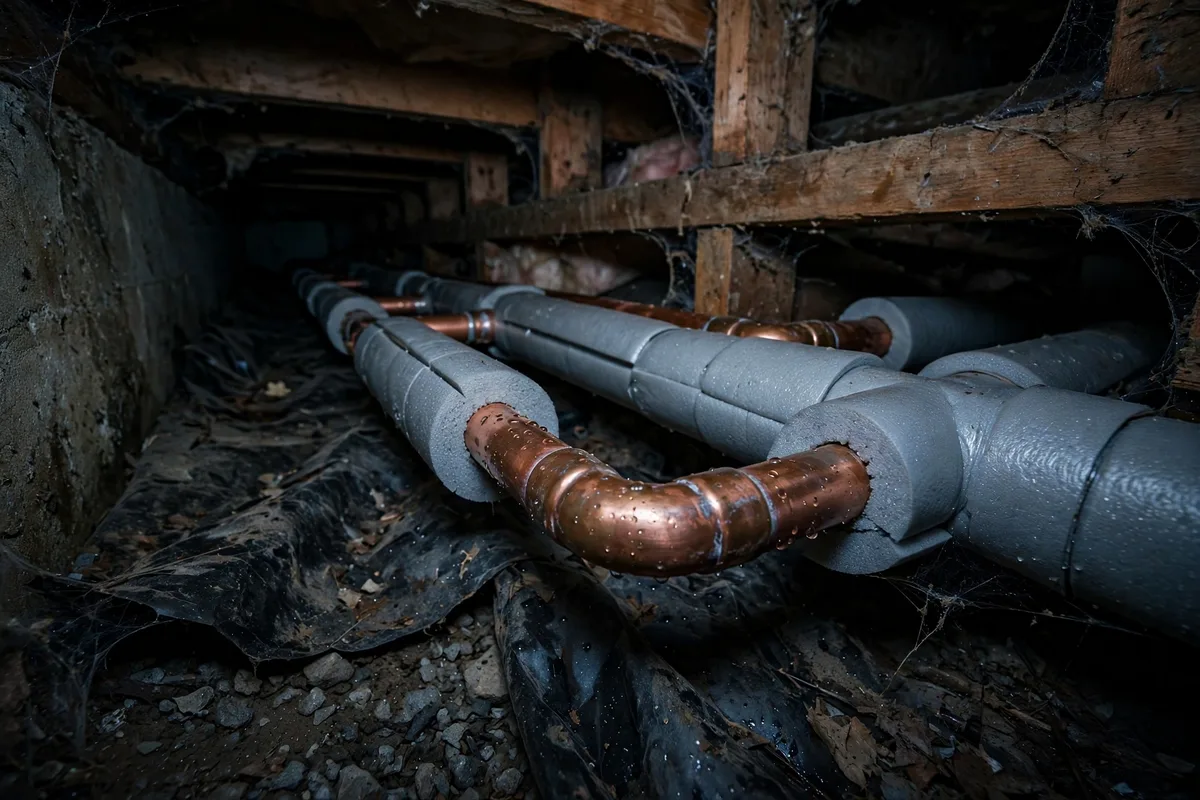
Where pipes freeze first
- pipes on outside walls, where cold air cools the wall cavity.
- pipes in crawl spaces, where wind blows under the house.
- pipes in attics, where insulation may leave gaps around the run.
- pipes in unheated garages, where the air tracks outdoor cold.
- pipes near vents, gaps, and foundation cracks that let drafts in.
- pipes to outdoor faucets, which sit exposed to wind and cold.
Keep pipes warm
- Wrap exposed pipes in foam insulation sleeves, and tape the joints so no bare pipe shows.
- Seal gaps where pipes pass through walls, floors, and foundations with caulk or foam.
- Insulate the crawl space walls and the garage walls that hold pipes.
- Open cabinet doors under sinks on outside walls, so warm room air reaches the pipes.
- Shut off outdoor faucets from the indoor valve and drain the line before winter.
- Keep the heat on when you leave for a trip, even at a low setting, so the home never sits cold.
On a bitter night
When a hard freeze threatens, let faucets on outside walls drip slowly. A slow drip keeps water moving and relieves pressure, which lowers the chance of a burst. Open the cabinet doors under those sinks, and keep the home heat steady instead of setting it back overnight.
Watch the forecast for the coldest stretch, not just the overnight low. Pipes freeze when the air around them stays at or below freezing for hours, and wind speeds it up. A pipe that survived last winter can freeze this winter when a longer cold snap arrives.
If a pipe freezes
- Open the faucet the pipe feeds, so steam and water have somewhere to go as the ice melts.
- Warm the pipe gently with a hair dryer, warm towels, or a space heater set at a safe distance.
- Never use an open flame to thaw a pipe. A torch can scorch wood, melt solder, and start a fire.
- Work from the faucet back toward the frozen section, so melting water can drain out.
- Call a plumber when the pipe splits, when you cannot find the frozen section, or when the main line freezes.
- Shut off the main water valve at once when a pipe bursts, and move valuables out of the water path.
After the freeze: check for damage
Once a frozen pipe thaws, check for damage before you trust it. Look for drips at joints, wet drywall, and water stains on ceilings below the pipe run. A small split can leak slowly for days before it shows, so check the area again the next morning.
Run the faucet and watch the flow. A weak or sputtering flow after a thaw can mean ice still blocks part of the pipe, or a split diverts water inside the wall. If the flow stays weak or you hear water running where no faucet runs, shut off the main valve and call a plumber.
Further reading: The Ready.gov winter weather guide covers home prep, pipe protection, and cold-weather safety steps. Ready.gov winter weather guide
Frequently Asked Questions
Pipes on outside walls, in crawl spaces, in attics, and in unheated garages freeze first. Pipes near drafts and vents freeze faster than pipes in warm rooms.
Yes, when a hard freeze threatens. A slow drip keeps water moving and relieves pressure, which lowers the chance of a burst.
Yes, with gentle heat from a hair dryer or warm towels. Never use an open flame, and open the faucet so steam and water have somewhere to go.
Pipes can freeze when the air around them stays at or below freezing for hours. Wind and drafts speed it up, so sheltered pipes hold out longer.
Shut off the main water valve, open faucets to drain pressure, and call a plumber. Move valuables out of the water path while you wait.